


The Brown Law Firm can help you through the claims process if you’re injured as a pedestrian in Juneau. Walking around Juneau should feel like a normal part of your day. But pedestrian accidents can happen very easily, and when they do, they can throw everything else off. We can help you through it. Set up a free consultation today.
Does it Make Sense to Get a Lawyer?
There’s never a good time to get hurt—let alone when you’re a pedestrian that has virtually no protection against a moving vehicle or something else that’s unsafe. Yet in a place like Juneau, these kinds of accidents happen a lot. When they do, you quickly learn that things get complicated.
That’s usually when getting a lawyer starts to make sense, and that’s where our team can step in to:
- Explain what your options actually are.
- Gather the medical records and evidence needed to support your claim.
- Handle the insurance company so you’re not stuck dealing with adjusters over and over.
- Help make the process easier on both you and your family while you focus on recovering.
Every pedestrian accident has its own details and challenges. But when you’re the person dealing with the injuries, it stops feeling like a legal process and starts feeling very personal very quickly.
Where Do Pedestrian Accidents Happen in Juneau?
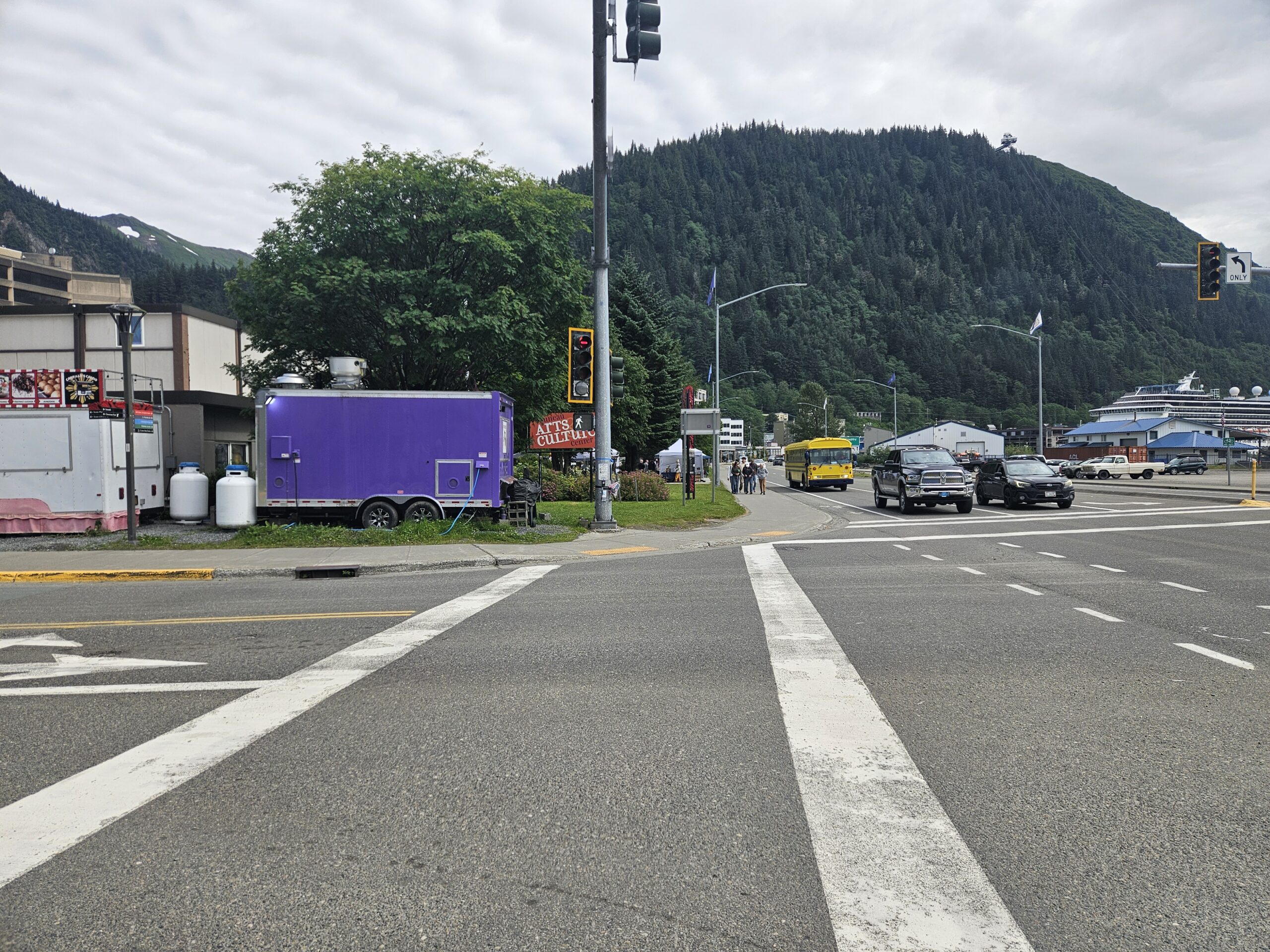
Realistically, a pedestrian accident can happen anywhere in Juneau. But again, it’s about the underlying factors. It’s simply more likely to be in a pedestrian accident in certain parts of the city at certain times of the day, especially at:
- Downtown intersections. Franklin Street, Front Street, and the areas around Marine Way can get busy with pedestrians, vehicles, and visitors.
- Egan Drive and Yandukin Drive. This intersection near Fred Meyer has been the subject of safety improvements because of the sheer number of accidents that happen there, as well as concerns about limited pedestrian crossing options.
- Shopping areas near Nugget Mall. Parking lots, driveways, and vehicle entrances can create problems when drivers aren’t watching for people on foot.
- The Juneau-Douglas Bridge and Douglas Highway. Pedestrians have to share space with steady vehicle traffic, particularly around intersections and crossing areas.
- The Juneau Seawalk and waterfront. These are popular walking areas, but nearby streets, parking areas, and vehicle access points can still create risks.
What you’ll notice about these places is they happen to be where people work, shop, go to school, meet friends, and spend time with family. In simpler terms, they’re extremely busy places. That can help explain why these kinds of accidents happen, but it doesn’t excuse them.
How Legal Responsibility Works After a Pedestrian Accident?
Once the immediate shock of a pedestrian accident wears off, one of the biggest questions people usually have is simple: who’s actually responsible for my accident? Generally, it falls on whoever was negligent, but in the context of a pedestrian accident, that’s usually going to land on a driver that was:
- Distracted or looking at their phone
- Speeding through a busy area
- Rushing through a turn
- Failing to yield at a crosswalk
- Simply not paying attention to pedestrians
These are pretty clear examples of negligence, but the overall circumstances are also important. What that means for you is that it’s not always on the driver that hit you. Others can share responsibility if they were also negligent. And that usually brings in:
- Another driver who caused the chain of events or their employer if they were making deliveries, etc.
- A property owner, management or business responsible for an unsafe parking lot or walkway.
- A construction company that created unsafe walking conditions.
- The City and Borough of Juneau or the State of Alaska if dangerous sidewalks, missing signs, broken signals, or unsafe road design contributed to the accident.
That’s why these cases aren’t always as straightforward as they first appear. Sometimes multiple people or companies share responsibility, which means finger-pointing and confusion. And while it doesn’t change your options, you still need to understand what you’re going to have to do to get financial help for your injuries.
What Your Options Are After a Pedestrian Accident
Most people know they need help after a pedestrian accident. What they usually don’t know is what that help is actually supposed to look like. Meanwhile, the medical bills start showing up, work may become difficult or impossible, and the insurance company often starts calling before you’ve even had time to fully process what happened. In most situations, your legal options come down to two options:
- Filing an insurance claim. This is usually the first step, and it happens outside of court. In many cases, it’s the faster route. The problem is that the insurance company controls most of the process early on. They decide how they investigate the accident, whether they accept responsibility, and what they’re willing to offer financially. Their goal is usually to settle the claim for as little as possible.
- Filing a lawsuit. A lawsuit takes more time, but it also creates a more balanced process. Once a lawsuit is filed, both sides can formally gather evidence, question witnesses, and present information under court supervision if a fair resolution can’t be reached on its own.
The decision on which option to go with is ultimately yours. Either way, though, the goal stays the same: recovering damages for what the accident has cost you. That can include:
- Current and future medical bills
- Current lost income or a loss of future earnings if you can’t work anymore
- Repair/replacement costs for your damaged clothing, shoes, or other property
- Pain and suffering
- Emotional distress
- Reduced quality of life
- Funeral and burial expenses, as well as other related expenses if the accident ends up being fatal. This is usually done through a “wrongful death” claim.
Like other kinds of accidents, you have a two-year deadline to file after a pedestrian accident. But that doesn’t mean you should wait. The longer you wait, the harder it’ll be to get the information and evidence that puts your claim in a stronger position.
Information That Can Help a Pedestrian Accident Claim
A lot of pedestrian accidents in Juneau happen in the same places for many of the same reasons. But that doesn’t necessarily tell you what you need to know when it happens to you. That’s where information can help. But before you try to do anything, the first step is:
- Calling 911 to get police and an ambulance to the scene.
Everything else flows from that step. It ensures you at least have some authorities there to help with your injuries and documenting things. But you can also do that yourself by getting:
- Pictures or videos of the scene, your injuries, the vehicle involved, nearby crosswalks, traffic signals, lighting, and anything else that might help explain what happened.
- Names and contact details for anyone who saw the accident or helped you afterward.
- The driver’s name, contact details, license plate number, and insurance information. If they didn’t stick around, try to remember everything you can about their vehicle.
All of this sounds simple enough, but you have to remember this: pedestrian accidents can mean pretty serious injuries. Usually, you’re not able to do anything except wait for an ambulance. That’s totally okay. As long as there are a few pictures and details from the people involved, that’s enough to get the ball rolling. But you have to also think about the things that are going to come later, like:
- Medical records and bills showing your injuries and the treatment you’ve needed
- The police report
- Traffic camera, dashcam, or surveillance footage from nearby businesses or homes
- Progress pictures of your injuries as they heal or get worse
- Pay stubs or other records showing how much work you’ve missed and what you’ve lost in income
- Records of any damaged personal belongings, like your phone, glasses, clothing, or other items
One thing to keep in mind is that video footage can disappear pretty quickly. But either way, you don’t have to try to do it all yourself. Our team can step in, help track down evidence, and fill in any gaps. Then we’ll be there to answer your questions and guide you through the process.
Frequently Asked Questions
What if I was hit in a parking lot in Juneau?
That still counts. Drivers have a responsibility to watch for people walking, even when they’re moving slowly through a parking lot. And depending on where it happened, the business or property owner may also share responsibility if unsafe conditions played a part.
Do I really need a police report after a pedestrian accident?
Yes. It’s one of the most important pieces of information you’ll have. The report helps document what happened, who was involved, and what officers found when they arrived. It doesn’t automatically prove who’s at fault, but it’s going to be important when you start dealing with the insurance company.
What if the driver took off after hitting me?
That makes things more complicated, but it doesn’t mean you’re out of options. Depending on your insurance coverage, you may still be able to use uninsured motorist coverage or other available policies. Our team can help you figure out what options you have and where to go from here.
Juneau Pedestrian Accident Victims Can Count on The Brown Law Firm
A pedestrian accident in Juneau can affect nearly every part of your life at once. You may be dealing with painful injuries, missed paychecks, transportation problems, medical treatment, and uncertainty about what happens next.
When that happens to you, you can count on our team at The Brown Law Firm to be there to explain your options, help you get the right evidence, and handle the claims process to protect your rights. Set up a free consultation today.